Why winter tyres truly make a difference
Winter tyres are not just for snow. When temperatures drop to around 7°C or below, the composition of winter tyres becomes a significant advantage as road conditions change. Their rubber remains more flexible at low temperatures, helping the tyre to maintain grip and stability on cold, wet and slippery roads.
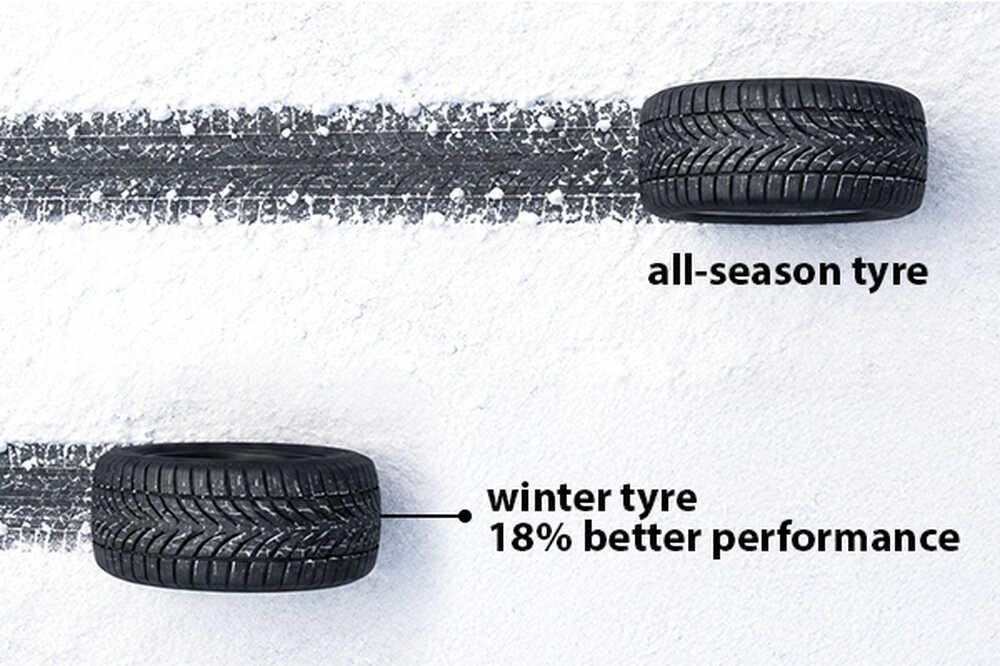
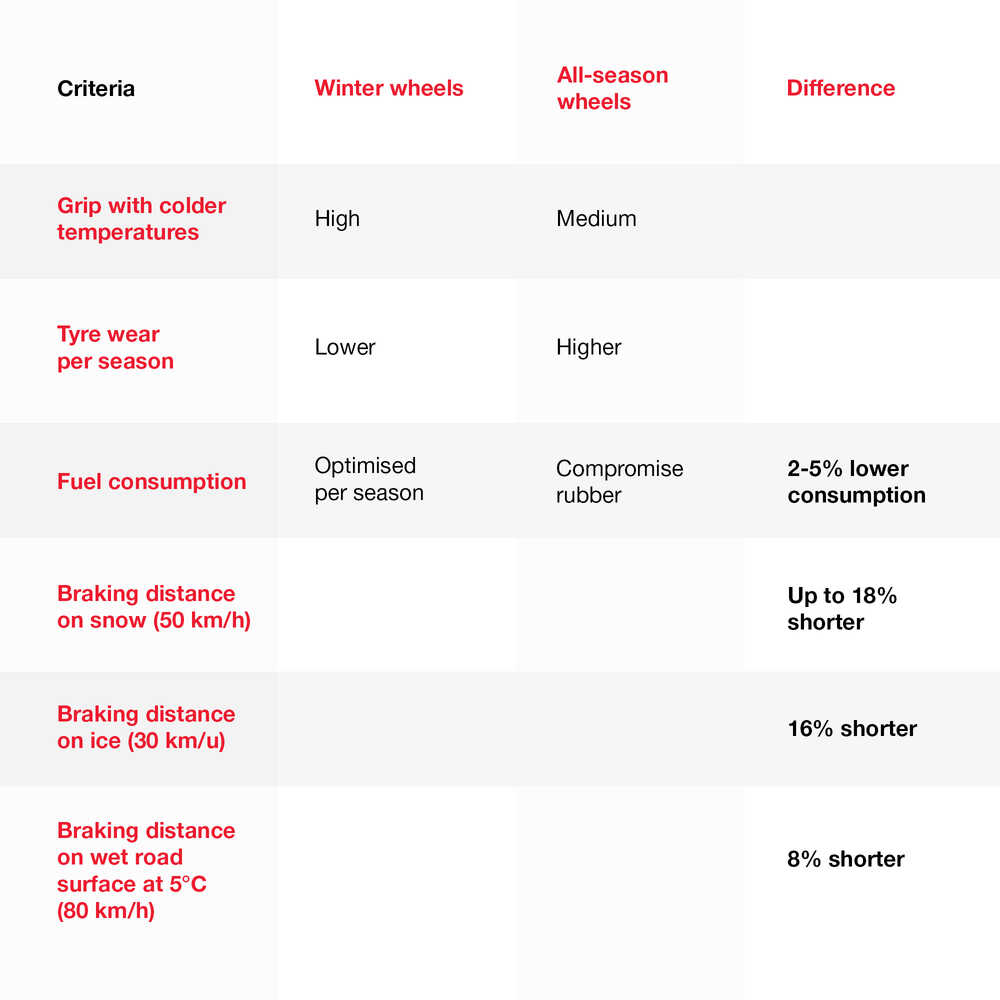
This becomes particularly important when you need to brake unexpectedly. As the supplied visual comparison shows, winter tyres offer clear advantages over all-season tyres in several winter conditions.
• up to 18% shorter braking distance on snow at 50 km/h
• 16% shorter braking distance on ice at 30 km/h
• 8% shorter braking distance on wet roads at 5°C and 80 km/h
Why all-season tyres remain a compromise

All-season tyres combine the properties of summer and winter tyres in one. This makes them appealing to drivers who prioritise convenience and live in a relatively mild climate. However, a tyre designed to cover a broad range of conditions is not the same as one specifically developed for a particular season.
The difference becomes more significant as winter conditions become more challenging. The right choice will always depend on your vehicle, your driving profile, your region, and the conditions you regularly encounter.
For drivers who regularly have to navigate cold, wet, slippery or snowy roads in winter and who do not want to compromise on performance, dedicated winter tyres are the better choice. TyreSafe also explains that winter tyres are specifically designed for cold and wet conditions, whilst all-season tyres provide more of a year-round solution.
Why an original Honda winter wheel set is a smart choice

A winter wheel set is a convenient solution for seasonal changes. It provides a complete rim and tyre combination to help prepare your vehicle for winter conditions such as low temperatures, rain, frost, slippery roads and road salt.
With an original Honda winter wheel set, you can keep your vehicle looking its best. The sets combine original Honda rims with winter tyres in a solution designed to suit the vehicle. So you get not only the winter grip and control you need, but also the quality, fit and appearance associated with a Honda.
• Maximum grip and stability during the winter months
• Greater comfort and control on cold and wet roads
• Quick and practical seasonal wheel swap
• Protection for your original summer wheels against dirt, stone chips and road salt
• The original Honda look, with rims that complement your vehicle’s design
Having a complete set of winter wheels also makes seasonal swaps easier. Rather than repeatedly removing and remounting tyres on the rims, you simply change the entire wheel. This means a quicker changeover and helps to keep your original summer wheels in better condition.
The right tyre for the right season
The benefits of summer and winter tyres are different, which is precisely why it makes sense to swap them over seasonally.
• Winter tyres: developed for cold temperatures and winter conditions, with a focus on grip, stability and braking performance on cold, wet, slippery and snowy roads.
• Summer tyres: developed for warmer conditions, delivering optimal performance as temperatures rise.
Using each tyre type in the conditions it was designed for helps to ensure that your vehicle is always well-matched to the road, all year round. Using each type in its intended season also helps to spread wear across both sets.
When should you switch to winter tyres?
A commonly used guideline is 7°C: when temperatures consistently reach or fall below this level, it is time to consider switching to winter tyres. Do not wait for the first snowfall. Cold, wet roads, morning frost and sudden temperature shifts often strike much earlier.
TyreSafe recommends winter tyres for the colder period and stresses that cold, wet roads can have a significant impact on tyre grip and performance.
Naturally, the exact timing of the switch depends on weather conditions, your driving profile, and the region in which you drive.
Opt for confidence this winter
Winter driving is about confidence. Confidence in your grip. Confidence in your control. Confidence in how your vehicle responds when conditions suddenly change.
Prepare your vehicle for winter in a practical and stylish way with an original Honda winter wheel set. Explore our range of Honda winter wheel sets.
Not sure which winter wheel set is right for your Honda? Contact your Honda dealer. They can advise you on the right solution for your specific model and, if required, arrange an appointment for your seasonal wheel swap.
Sources / editorial source notes
Source: TyreSafe – Winter Driving & Tyre Safety Advice: https://www.tyresafe.org/tyre-advice/tyre-types/winter-tyre-safety/
Source: TyreSafe – All-season tyres: https://www.tyresafe.org/tyre-advice/tyre-types/all-season-tyres/
Source: ADAC – general information on all-season tyres and independent tyre testing: https://presse.adac.de/meldungen/adac-ev/technik/ganzjahresreifen.html